

Defining Love
For most of my life, I’ve heard the phrase, “God is love.”
It’s a beautiful statement — probably the most important idea in all of spirituality.
But it’s also one of the most misunderstood.
Everyone uses the word love, but we don’t all mean the same thing.
To some, love is a feeling.
To others, it’s romance.
To others, it’s affection, loyalty, sacrifice, or approval.
Some people even use the word “love” to justify control, fear, or manipulation.
So when I say, “God is love,” I don’t want it to be vague, poetic, or sentimental.
I want it to be clear.
I want it to mean something.
That’s why I use a more precise word — one that cannot be twisted or misunderstood:
benevolence.
Why Love Isn’t Always Clear Enough
Think of how many types of “love” we experience:
- romantic love
- friendship
- family affection
- emotional attachment
- admiration
- desire
- loyalty
- nostalgia
Some of these are healthy.
Some are confusing.
Some are selfish.
Some are conditional.
So when someone says “God loves you,” people interpret it based on their own personal history of love — and not all histories are positive.
Some people grew up with love that was unpredictable.
Some grew up with love tied to obedience.
Some experienced “love” mixed with guilt, punishment, or fear.
Some have only known love as a feeling that comes and goes.
That’s why simply saying “God is love” is often not enough.
We need a definition that restores the meaning behind the word.

What I Actually Mean: God Is Benevolent
When I say that God is love, what I truly mean is:
God is benevolent — always, unconditionally, and without exception.
Benevolence is not a feeling.
It is not emotional.
It does not waver.
It does not depend on mood, circumstances, or behavior.
Benevolence means:
God always wills good toward every one of us.
Not sometimes.
Not when we behave.
Not when we are strong or pure or righteous.
Not when we meet certain conditions.
Always.
Despite our flaws.
Despite our confusion.
Despite our struggles.
Despite our humanity.
A God who is benevolent is a God who never turns against us, never stops believing in our potential, and never stops desiring our healing and growth.
This kind of love is steady, rational, and trustworthy.

How Benevolence Leads Us to Redemption
If God is benevolent — always willing good toward us — then redemption is not a threat.
It’s an offer.
It’s not a courtroom.
It’s a process of healing.
A journey of becoming.
Redemption, in this view, means:
- growing into the person we were meant to be
- letting go of fear and shame
- learning to embrace compassion
- rising into higher love
- becoming more like the benevolence that constantly flows toward us
God’s benevolence doesn’t force redemption on us — it invites us into it.
We move toward it freely, naturally, and gradually as we learn to trust the goodness that holds us.
How This Shapes the Way We Live
When we begin to understand God as benevolent, everything changes.
We start to believe:
- We are safe.
- We are loved.
- We are growing.
- We are not alone.
- Our mistakes do not define us.
- We don’t need to live in fear.
- We don’t need to prove ourselves worthy.
- We can relax into the truth that we are cared for.
And as we internalize this benevolence, we begin to express it outwardly.
Redemption begins to show itself as:
- patience with others
- compassion for suffering
- forgiveness
- empathy
- willingness to see the good
- choosing kindness even when it’s hard
This is love in its clearest form — benevolence becoming human behavior.
Benevolism
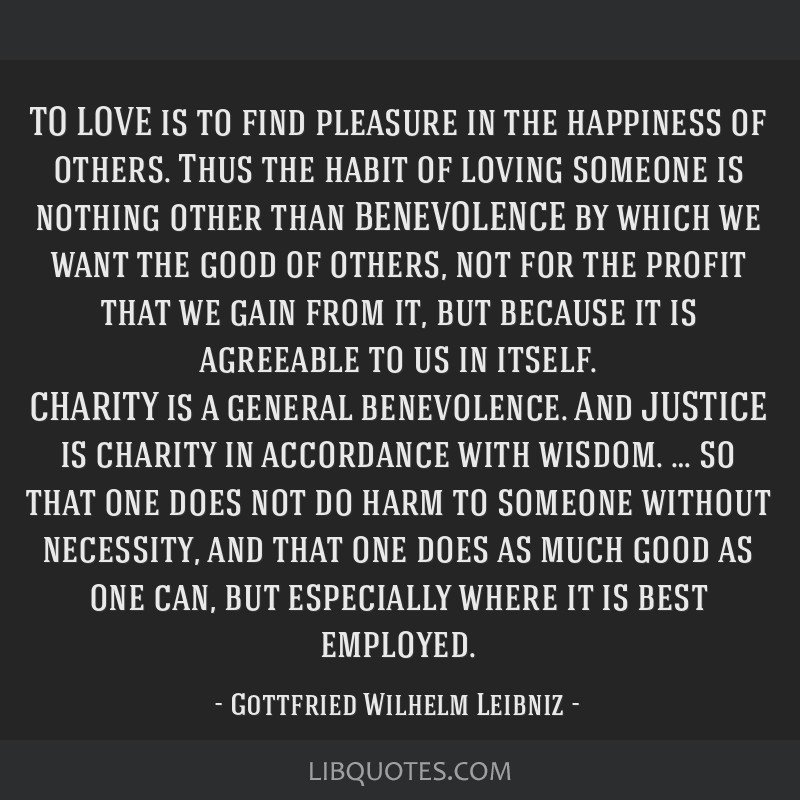
As I’ve continued developing this understanding of divine love, I’ve even thought that if I ever started a religion, I would call it Benevolism — the belief that God’s core nature is benevolence.
And I’d call its followers Benetians, because a person who receives God’s benevolence naturally learns to express benevolence in their daily life.
Not as dogma.
Not as a system.
Not as a requirement.
Just as a way of describing the spiritual truth that benevolence grows benevolence.
But this is more of a creative thought experiment than a serious plan.
The main point remains simple and universal.
Conclusion: Benevolence Is the Heart of Love
So when I say “God is love,” I am not speaking poetically.
I am not being vague, metaphorical, or mystical.
I am saying something very specific:
God always wills good toward us — and that benevolence is the truest definition of love.
This is why we can trust God.
This is why we can let go of fear.
This is why redemption isn’t something to dread — it’s something to grow into.
And this is why love, when understood correctly, becomes the most powerful spiritual force in the universe.
If we receive benevolence, we will eventually give benevolence.
If we are loved unconditionally, we will begin to love unconditionally.
If we understand God’s goodness, we will reflect that goodness.
And that, ultimately, is what it means to say:
God is love.